
Skip to content
Skip to content
No results
  • Courses
  • Imprint
  • Mobilities
    • Seminar 2023
    • Seminar 2024
    • Seminar 2025
    • Seminar 2026
  • Privacy Policy
  • Quantitative Thinking
  • R Shiny Apps
    • Animated Learning Paths
    • Bayesian Correlation Analysis
    • Bayesian Statistics – the Frog Example
    • Bayesian t-Test Teaching App
    • BLIM simulation
    • Classical and Bayesian parameter estimation
    • Comparison of Frequentist and Bayesian analysis in ANOVA post-hoc settings
    • Conditional testing
    • Deterministic knowledge assessment
    • Distributions
    • Excess of Success
    • Fpower
    • Fringe & Neighbourhood
    • Generalizability of Fit
    • Generating knowledge structures
    • Identifiability
    • Inductive Item Tree Analysis (IITA)
    • Intraclass Correlations
    • James-Stein estimator
    • Knowledge assessment app
    • LexOPS
    • Linear regression
    • Local Independence
    • Model comparison approach, Model 1
    • Model Comparison Approach, Model 2
    • Modeling the 2018 PISA Dataset based on PCA and Clustering
    • Multiverse analysis
    • n-Neighbourhood
    • Numerical Methods
    • P-values & Bayes factors
    • Parameter estimation
    • Precedence Relation and Corresponding Quasi-Ordinal Knowledge Space
    • Probabilistic Knowledge Assessment
    • Probability Distributions
    • Properties of knowledge spaces
    • Properties of relations
    • QQplot
    • R & Shiny
    • Race Model
    • Reliability
    • Selection decision
    • Sequential testing with p-values and Bayes factors
    • Shortening a Test for Skill Assessment
    • Similarity Assessment
    • Simulating BLIM
    • Simulating Psychophysical Tasks
    • Simulating Statistical Power
    • Skill mApp
    • Surmise relations
    • Tutorial on Item Response Theory (IRT)
    • Tutorial on Knowledge Space Theory (KST)
    • TWIN
    • TWIN re-visited
    • Urn Problem
    • Validating BLIM-simulated Data
    • Validating knowledge structures
    • WorkKST – Working with Knowledge Space Theory
Quantitative Thinking
  • Mobilities
    • Seminar 2023
    • Seminar 2024
    • Seminar 2025
    • Seminar 2026
  • R Shiny Apps
  • Courses
  • Privacy Policy
  • Imprint
Quantitative Thinking

Mobilities

Here you can find detailed information on our recent and ongoing annual seminars.
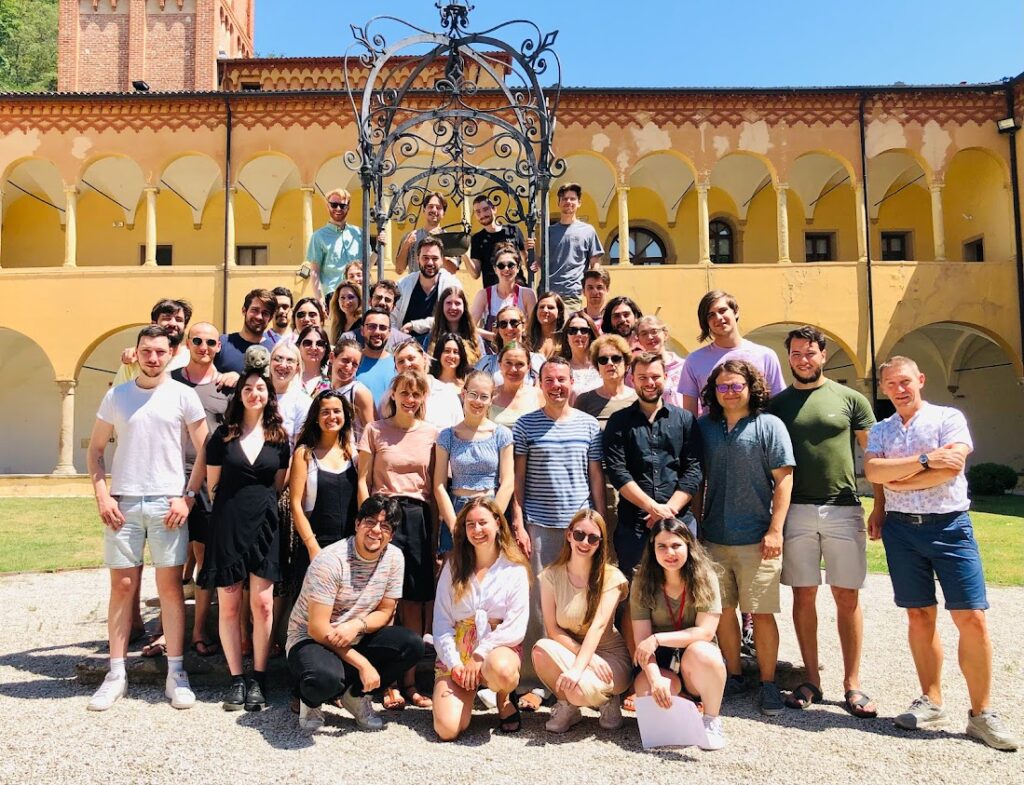
Source: QHELP consortium
  • 2023 (Arifana, Portugal)
  • 2024 (Balatonföldvar, Hungary)
  • 2025 (Balatonföldvar, Hungary)
  • 2026 (Balatonföldvar, Hungary)

Information about earlier seminars can be found at the QHELP project homepage.


Copyright © 2026 - University of Graz on behalf of the TquanT and QHELP consortia.

This work was finanically supported by the European Commission through the Erasmus+ Programme.